

When much of the venture capital world has been focused on generative AI, another frontier of technology has quietly been advancing — the intersection of neuroscience and computing. Brain-computer interfaces (BCIs), once considered experimental, are now approaching real-world medical applications.
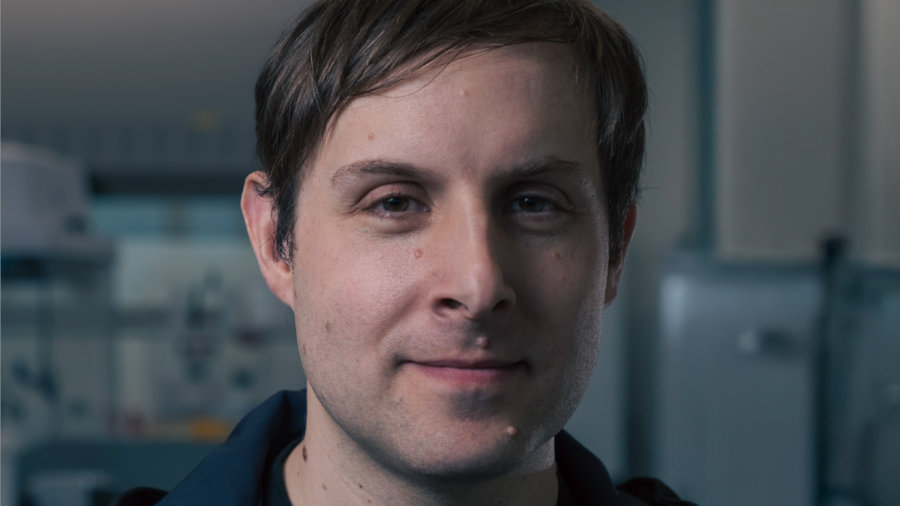
One company moving aggressively in that direction is Science Corporation, founded by Max Hodak, the former co-founder and president of Neuralink. The startup recently announced it has secured $230 million in Series C funding, pushing its valuation to approximately $1.5 billion and bringing total capital raised to $490 million.
The funding signals growing investor confidence in next-generation neural interface technologies — particularly those with a clear path toward commercialization.
Building the First Commercial Brain-Computer Interface for Vision
In the near term, Science Corp is focusing on a technology known as PRIMA, a tiny retinal implant designed to help restore functional vision to patients suffering from severe macular degeneration.
The device itself is extremely small — reportedly smaller than a grain of rice — and is implanted in the eye. It works in tandem with camera-equipped smart glasses that capture visual information and transmit it to the implant, allowing the brain to interpret visual signals again.
The technology was not originally developed by Science Corp. The company acquired the intellectual property and development assets in 2024 from French biotech firm Pixium Vision. Since the acquisition, Science Corp has refined the system and continued clinical testing.
Results from trials involving 47 patients across Europe and the United States have shown promising outcomes. According to the company, roughly 80% of participants demonstrated meaningful improvements in visual acuity, including the ability to read letters, numbers, and words.
If validated by regulators, the technology could represent one of the first real-world examples of a brain-computer interface restoring a lost human sense.
Regulatory Path and Global Market Strategy
Science Corp is now preparing for regulatory approvals that could bring PRIMA to market. The company has submitted a CE Mark application in the European Union, with expectations that a decision could arrive around mid-2026.
If approved, Europe would likely become the first commercial market for the implant.
Germany is widely expected to be the initial launch location because the country maintains regulatory pathways that allow earlier access to innovative medical technologies.
Meanwhile, the company says it is in ongoing discussions with the U.S. Food and Drug Administration (FDA) regarding the device’s approval process in the United States.
Beyond macular degeneration, Science Corp is expanding its clinical trials to treat additional inherited retinal diseases, including Stargardt disease and retinitis pigmentosa, two conditions that frequently lead to severe vision loss in younger patients.
Expanding Research Beyond Vision
While PRIMA is currently the company’s most advanced program, Science Corp is also investing heavily in broader neurotechnology research.
One experimental initiative involves the development of a biohybrid neural interface. The system combines engineered neurons grown from stem cells with a specialized electronic device designed to sit on the brain’s surface and form biological connections with existing neural circuits.
If successful, this approach could open new possibilities for treating neurological disorders or enabling advanced brain-computer interactions.
The company has also launched a separate venture called Vessel, focused on organ preservation technology. The platform aims to develop miniaturized perfusion systems capable of maintaining organs outside the body for extended periods.
Such technology could enable transportation of transplant organs on commercial flights or even allow patients to maintain organs at home rather than in hospital intensive care environments.
Investor Support and Market Momentum
The Series C funding round drew participation from several prominent venture firms, including:
- Lightspeed Venture Partners
- Khosla Ventures
- Y Combinator
- Quiet Capital
The round also included investment from In‑Q‑Tel, a nonprofit investment group that supports technologies with potential applications for government agencies such as the FBI and CIA.
Science Corp currently employs around 150 people, with teams focused on neuroscience research, hardware engineering, and medical device development.
The Race Toward Real-World Brain Interfaces
Brain-computer interface technology is rapidly becoming one of the most closely watched sectors in deep tech. Companies are racing to move beyond laboratory prototypes and deliver clinical products capable of restoring lost neurological functions.
With PRIMA progressing through regulatory review and clinical validation, Science Corp may soon become one of the first companies to bring a commercial BCI-enabled medical device to patients.
If that milestone is reached, it could mark a major shift — transforming brain-computer interfaces from experimental research into practical healthcare solutions.