

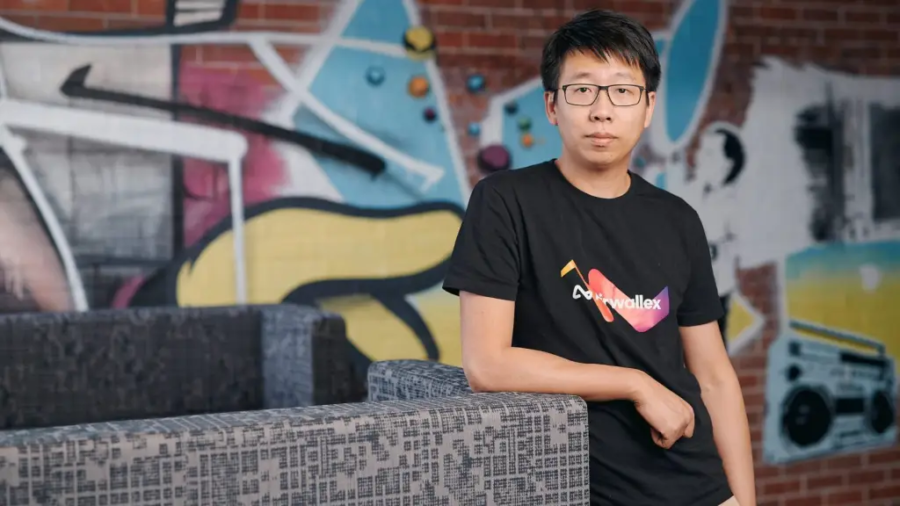
What if the biggest obstacle standing between a great AI idea and a viable business was simply money? Jack Zhang, billionaire co-founder and CEO of global fintech Airwallex, is betting that it is. And he is doing something about it.
Zhang has announced a new program that will hand $100,000 in equity-free funding to ten Australian founders under the age of 25 who are building AI startups. Every year. No strings attached to your ownership.
Introducing Latitude 37
The program is called Latitude 37, named after the geographic coordinate of Melbourne, the city where Airwallex was born. The name is deliberate. It roots the initiative in Australian identity while signaling a global ambition.
Each year, ten selected founders will receive more than just capital. They gain access to Airwallex’s global network, an immersion tour spanning San Francisco and Singapore where the company is now headquartered, and direct exposure to the company’s AI-native financial infrastructure. For a young founder still figuring out product-market fit, that kind of access is hard to put a price on.
The total commitment adds up to $1 million per year, a meaningful signal that this is not a one-off gesture but a structured, ongoing investment in the next generation of Australian tech.
Why Equity-Free? Zhang Has a Clear Answer
The decision to offer funding without taking equity is one of the most interesting aspects of the program. Zhang was direct about his reasoning.
“The capital is equity-free because the first year is when ownership gets given away cheapest and protected the least,” he wrote in a social media post announcing the initiative. “I want these founders to keep theirs.”
It is a refreshingly honest take from someone who has lived it. Early-stage founders, especially those outside major tech hubs, often have little negotiating leverage. They take the first deal available because they need to survive. Zhang wants to change that dynamic, at least for ten founders a year.
The Problem He Is Trying to Solve
Zhang did not frame Latitude 37 as charity. He framed it as fixing a structural gap in the Australian startup ecosystem.
“Early-stage funding, particularly in AI, remains uneven,” he said. “Too many founders rely on overseas capital too early, on terms that don’t serve them. Too many promising ideas die in the first year because the founder can’t afford to keep the lights on while they find product-market fit. That’s the gap I want to help close.”
That gap is real. Australian founders have historically faced a smaller local venture market compared to the US or UK. The default path for many has been to seek offshore capital early, often giving up significant ownership and control in the process. Latitude 37 offers an alternative that keeps more power in Australian hands.
AI as a Force Multiplier, Not a Threat
Zhang’s view on AI itself is worth paying attention to. He does not see it as a job replacement engine. He sees it as a productivity multiplier that levels the playing field between small and large companies.
“A 14-person company in Brisbane or Adelaide can now compete against a 1,400-person incumbent in ways that were impossible two years ago,” he said. “AI is a force multiplier of productivity, not a substitute for the people who know their domain deeply.”
That framing matters for enterprise. It means the competitive moat is no longer purely about headcount or budget. It is about how well a team applies AI to a domain they genuinely understand. For startups with deep local or vertical knowledge, that is an enormous opportunity.
Zhang also pushed back on the idea that the AI era will be defined entirely by foundational model labs in San Francisco.
“The companies that will define the AI era are not just the foundational model labs in San Francisco,” he said. “They’re the platforms that take AI and make it useful in the real economy.”
Lessons From Airwallex’s Own Journey
Zhang speaks from real experience. Airwallex did not start with Silicon Valley connections or easy access to global capital. It started in Melbourne and had to build everything the hard way, from fundraising to hiring to finding product-market fit.
“The things that felt like disadvantages when we started Airwallex turned out to be the source of our edge,” Zhang reflected. “We weren’t part of the Silicon Valley ecosystem, so we had to do many things in hard mode.”
That hard mode, he argues, built resilience. And he believes Australian founders today carry a similar advantage, a global mindset from day one shaped by the necessity of thinking beyond a small domestic market.
“Australian founders already think globally from day one,” he said. “Latitude 37 is Airwallex’s commitment to making sure the next generation of those founders has the capital, the networks, and the support to get there.”
Who Should Apply
The program targets founders under 25 who are based in Australia and actively building in the AI space. Registrations of Interest for Latitude 37 are now open.
If you are a young founder with a genuine AI idea and the drive to build something real, this is one of the most founder-friendly opportunities currently available in the Australian ecosystem. No equity. Global network. Direct access to one of the most successful fintech founders the region has produced.
The Bigger Picture for Enterprise
For the broader enterprise and investor community, Latitude 37 is a signal worth noting. It reflects a growing recognition that AI-era companies will not all emerge from the same zip codes. The infrastructure costs of starting a company have dropped dramatically. The barriers that once separated world-class startups from regional ones are shrinking fast.
Programs like this accelerate that shift. And when someone with Zhang’s track record puts $1 million a year behind that belief, it is worth paying attention.