

Manufacturing companies are facing a growing challenge: labor shortages continue to increase while production demands become more complex. Traditional industrial robots have helped automate repetitive tasks for decades, but many factories still struggle with workflows that require flexibility and adaptation.
Barcelona-based robotics startup Theker believes the answer lies in a new generation of AI-powered robots designed to handle a wider range of industrial tasks rather than specializing in a single function.
The company has announced an $85 million Series A funding round, one of the largest robotics investments in Europe to date, as it accelerates efforts to bring its adaptable automation platform to industries worldwide.
Building Robots That Can Adapt
Unlike many industrial robots that are engineered for a single repetitive task, Theker is developing machines that can be reconfigured depending on operational requirements.
The company’s robotic systems are designed with interchangeable components, allowing businesses to modify arms, hands, and other hardware elements based on the work being performed. Whether handling apparel, sorting packages, managing warehouse inventory, or supporting manufacturing operations, the same platform can be adapted for different environments.
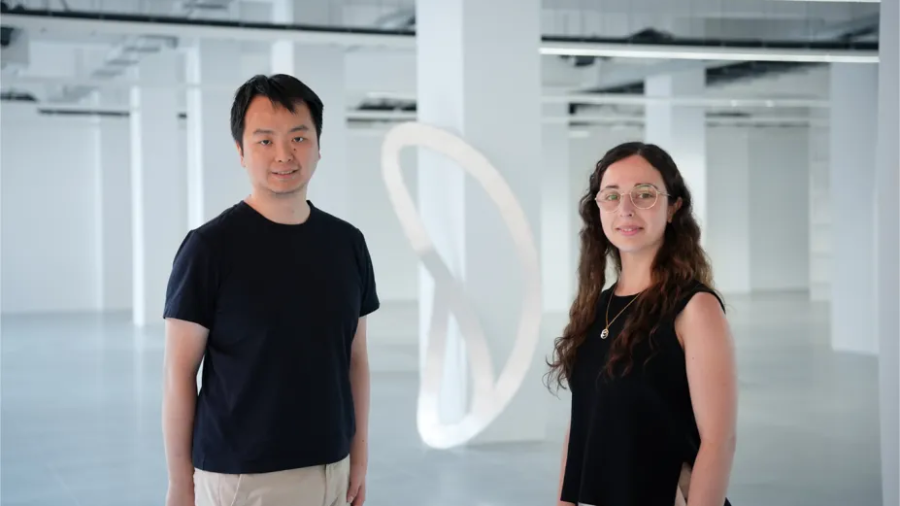
According to co-founder Carla Gómez Cano, the company’s vision is centered on creating robots that can operate effectively in real-world industrial settings where processes are often unpredictable and constantly evolving.
Rather than optimizing for one repetitive action, Theker is building technology intended to handle a broader range of operational challenges.
Investors Back the General-Purpose Robotics Vision
The funding round was led by CRV, with participation from several strategic and financial investors, including Samsung and Aglaé Ventures, the investment firm associated with LVMH Chairman Bernard Arnault.
The investment arrives less than a year after Theker completed a record-setting seed round, highlighting growing investor confidence in robotics platforms that combine artificial intelligence with flexible hardware systems.
The company believes future demand will increasingly shift toward robots capable of performing multiple tasks instead of being limited to a single workflow.
As enterprises explore ways to improve productivity while addressing workforce shortages, adaptable automation solutions are becoming an attractive alternative to traditional robotics deployments.
From Retail Operations to Industrial Manufacturing
One of Theker’s earliest supporters is Inditex, the parent company of global fashion retailer Zara.
While retail and logistics represent important initial markets, Theker’s ambitions extend far beyond distribution centers and apparel operations.
The company is targeting larger manufacturing environments where operational complexity often makes automation difficult to implement using conventional robotic systems.
By creating configurable robots that can be customized for different industrial processes, Theker hopes to reduce the barriers that have historically limited automation projects.
This approach could allow manufacturers to deploy robotic systems more quickly while adapting them as operational requirements change.
Expanding Globally
To support customer adoption, Theker has established a robotics showroom in Barcelona where enterprises can evaluate the technology in real-world scenarios.
The company plans to expand that strategy internationally as it grows across Europe, North America, and Asia.
The new capital will also support hiring across engineering, deployment, product development, and sales teams. Demand for positions has reportedly been strong, reflecting growing interest in the robotics and AI sectors.
As the company scales, management expects its workforce to grow significantly to support commercial expansion and customer deployments.
The Growing Opportunity for AI-Powered Automation
Theker’s funding reflects a broader trend unfolding across the industrial technology sector.
Organizations are increasingly looking beyond software-based AI applications and exploring how artificial intelligence can transform physical operations. Robotics companies that combine AI decision-making with adaptable hardware are attracting growing attention from investors seeking exposure to the next phase of automation.
For manufacturers, logistics providers, and industrial enterprises, the ability to deploy flexible robotic systems could help address workforce constraints while improving operational efficiency.
With fresh capital, strategic investors, and increasing market demand, Theker is positioning itself to become a significant player in the evolving industrial robotics landscape.
As enterprises continue searching for scalable automation solutions, the company’s vision of configurable AI-driven robots may represent an important step toward making industrial automation more flexible, accessible, and practical across a wide range of industries.