

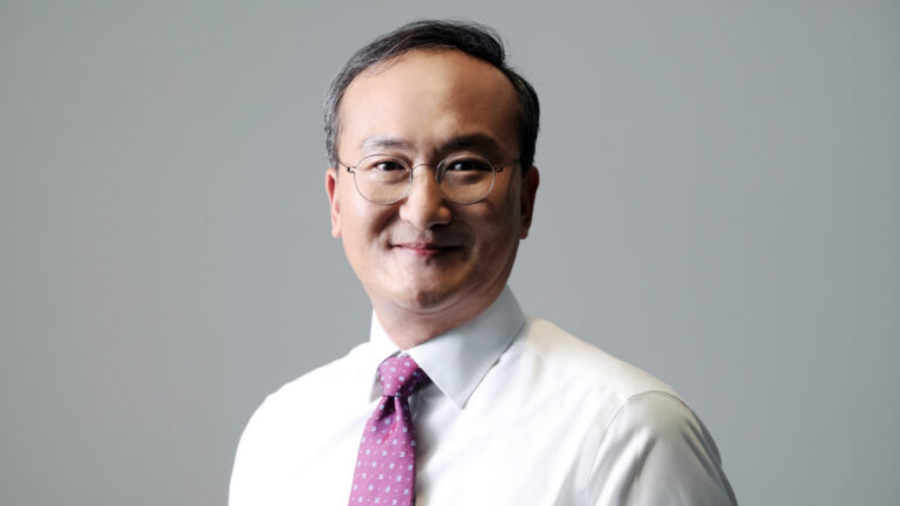
Intel Corporation has announced a major leadership appointment aimed at strengthening its foundry strategy and accelerating its capabilities in advanced packaging and system-level semiconductor integration.
On June 18, 2026, Intel confirmed the appointment of Seok-Hee Lee as Executive Vice President of Intel Foundry. Lee will report directly to CEO Lip-Bu Tan and will oversee advanced packaging, system integration, back-end technology development, and back-end manufacturing. The move signals Intel’s continued push to position itself as a stronger competitor in the global semiconductor foundry space, particularly in AI-driven and high-performance computing markets.
Strengthening the “Back-End” of Semiconductor Innovation
At the core of this leadership change is Intel’s decision to formally elevate advanced packaging into a more focused and strategically managed business area. This shift reflects a broader industry trend: as chip design becomes more complex, performance gains increasingly depend not only on transistor scaling, but also on how multiple components are integrated into a single system.
Advanced packaging technologies enable the combination of logic, memory, and connectivity components into tightly integrated architectures. These approaches are becoming essential for AI workloads, data centers, and next-generation computing platforms, where power efficiency and performance density are critical.
Intel emphasized that Lee’s appointment is intended to accelerate this area of development and improve execution across system-level integration. According to CEO Lip-Bu Tan, advanced packaging and integration are becoming “defining capabilities” for future computing systems, particularly as demand rises for heterogeneous architectures that blend multiple chip types into unified designs.
Tan highlighted Lee’s background in managing large-scale semiconductor and manufacturing operations, noting that his experience will be important in scaling Intel’s packaging technologies and strengthening end-to-end system integration across its foundry offerings.
Leadership Focus: System-Level Integration for AI Era Demand
In his new role, Seok-Hee Lee will focus on enabling tighter integration between Intel’s leading-edge technologies, including logic, memory, and networking components. This is increasingly important as customers shift toward system-level optimization rather than standalone chip performance.
Intel also pointed to upcoming technologies such as EMIB-T and HBI, which are expected to play a key role in its advanced packaging roadmap. The company aims to bring these solutions into high-volume manufacturing as part of its broader foundry expansion strategy.
Lee described Intel as uniquely positioned to lead in this space, particularly as AI and high-performance computing continue to drive demand for more sophisticated system integration. He noted his return to the company with a focus on advancing manufacturing capabilities and strengthening customer commitments in this critical segment.
A Veteran Semiconductor Executive Returns
Seok-Hee Lee brings extensive experience across the semiconductor and technology sectors. Prior to joining Intel, he served as President and CEO of SK On, and previously led SK hynix in a similar executive capacity. His background also includes earlier engineering and leadership roles at Intel, as well as academic experience in the field of semiconductor technologies.
His return to Intel marks a notable full-circle moment in a career deeply rooted in chip manufacturing and large-scale operational leadership across Asia’s semiconductor ecosystem.
Division of Responsibilities Within Intel Foundry
Alongside this appointment, Intel is also refining the structure of its foundry organization to better align responsibilities across front-end and back-end operations.
Naga Chandrasekaran, Executive Vice President of Intel Foundry, will continue reporting to CEO Lip-Bu Tan while leading front-end technology development and manufacturing. He will also oversee design enablement and customer-facing functions that support Intel Foundry’s growth strategy. This division of responsibilities is intended to improve execution speed and scalability as Intel ramps production of advanced process technologies such as Intel 18A, Intel 14A, and future nodes.
By separating focus areas between front-end process development and back-end system integration, Intel aims to create a more streamlined operational model that supports faster delivery cycles and improved manufacturing predictability for customers.
Transition in Leadership
Intel also confirmed that Executive Vice President Navid Shahriari will retire following a 37-year tenure with the company. His departure marks the end of a long career contributing to Intel’s operational and engineering development over several decades.
Strategic Outlook
This leadership restructuring underscores Intel’s broader strategy of reinforcing its foundry business at a time when semiconductor demand is being reshaped by AI workloads, cloud infrastructure expansion, and the increasing complexity of chip design.
By placing stronger emphasis on advanced packaging and system integration, Intel is signaling that future competitiveness will depend not only on transistor leadership, but also on the ability to deliver fully integrated computing systems at scale.
As the industry continues to evolve toward heterogeneous computing architectures, Intel’s latest organizational changes suggest a deliberate move to align its structure with the realities of next-generation semiconductor manufacturing.