

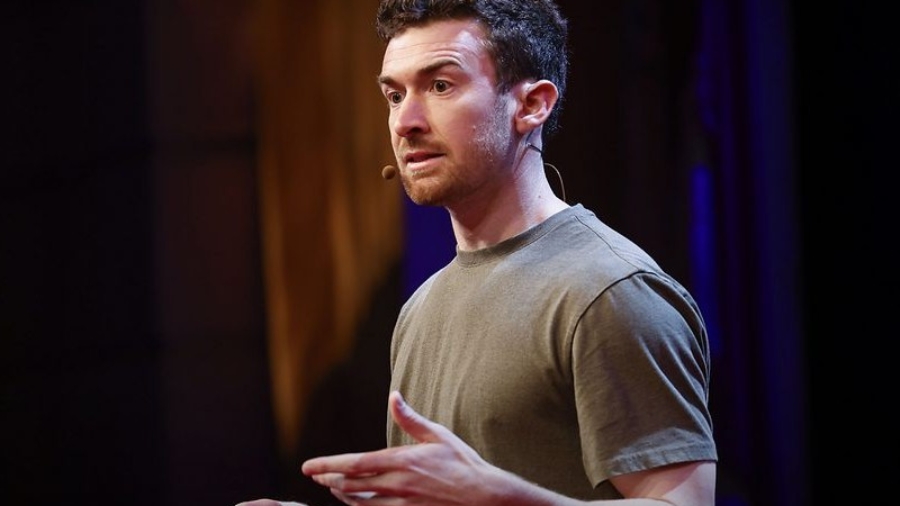
When artificial intelligence moves from answering questions to actually taking action, the technology behind it becomes just as important as the models themselves. That shift is creating a new layer of AI infrastructure, and Harrison Chase is one of the people helping build it.
Leadership Spotlight
Harrison Chase is helping shape the next phase of AI by focusing on a problem that is becoming increasingly important: how organizations can build, evaluate, and deploy AI agents reliably. As Co-Founder & CEO of LangChain, he has helped turn what began as an open-source project into a broader platform for agent engineering.
Rather than treating AI agents as simple chatbots, Chase’s work focuses on the systems surrounding them, including orchestration, evaluation, observability, deployment, and developer tooling. Through LangChain, LangGraph, and LangSmith, developers have access to tools for building and managing increasingly complex agent systems.
His approach reflects a larger change happening across the AI industry. The question is no longer simply what an AI model can generate. It is becoming how reliably an AI system can perform useful work in the real world.
By staying close to developers and continuously building around their needs, Chase represents a different kind of technology leadership: making AI useful, measurable, and deployable.
From Open Source Project to Agent Engineering Platform
The story of LangChain started much smaller than the company it has become.
According to LangChain, Chase began the project as a side project in late 2022, initially creating a Python package for building applications with large language models. After ChatGPT launched, interest in the project accelerated, eventually leading Chase and co-founder Ankush Gola to establish LangChain as a company in 2023.
The industry has changed significantly since then.
Early generative AI applications were largely focused on chat interfaces, question answering, and basic workflows. As developers began asking AI systems to perform longer and more complicated tasks, the need for better infrastructure became increasingly obvious.
That is where Chase and LangChain positioned themselves.
The company expanded beyond its original framework into LangGraph, which gives developers greater control over complex agent workflows, and LangSmith, a platform designed to help teams build, evaluate, deploy, and monitor agents.
The result is an ecosystem designed around a simple but increasingly important idea: AI agents need engineering infrastructure just like traditional software does.

The Shift From AI Models to AI Agents
One of the biggest changes in today’s AI landscape is the movement from models that simply respond to users toward systems that can plan, use tools, access information, and take actions.
That creates an entirely different engineering challenge.
An organization deploying an AI agent cannot simply ask whether the underlying model is powerful. It also needs to understand whether the agent is reliable, how it behaves when something goes wrong, how its performance can be evaluated, and how developers can improve it over time.
These are precisely the problems surrounding agent engineering.
LangChain describes its mission as building the future of agents and making it easier for developers to create agents that can use data and take actions. Its commercial platform, LangSmith, is designed around understanding, improving, and shipping those systems.
This is also why Chase’s role extends beyond simply leading an AI company.
He is helping define the tools, practices, and infrastructure that developers use to turn AI capabilities into working products.
Why Developer Adoption Matters
AI infrastructure only becomes valuable when developers actually use it.
Chase has maintained a strong connection with the developer community throughout LangChain’s growth, with the company continuing to emphasize open-source projects and educational resources. LangChain says its open-source projects have crossed 1 billion downloads, while its platform now works with a substantial portion of Fortune 500 companies.
That developer-first approach has helped LangChain evolve alongside the industry.
The company recently introduced LangChain Labs, an applied research effort focused on continual learning for agents. The initiative explores ways to use information generated by agents, including traces, feedback, evaluation results, and production behavior, to make agents better over time.
It represents another step in the same direction: building AI systems that do not simply work once, but can improve, adapt, and perform more reliably in production.
Why He Matters Now
The AI industry is entering a stage where experimentation alone is no longer enough.
Companies are moving from asking “What can AI do?” toward asking “How can we make AI do useful work reliably?”
That distinction is important.
The next generation of AI applications will require more than increasingly capable models. They will require infrastructure for building, testing, evaluating, monitoring, and improving agents.
Harrison Chase is operating directly in that layer.
His work with LangChain highlights a broader shift in technology leadership: some of the most important AI companies may not be the ones building the largest models, but the ones creating the infrastructure that allows thousands of other companies to build with them.
What’s Next
As AI agents become more capable, the complexity surrounding them will continue to grow.
Developers will need better ways to manage context, evaluate performance, understand failures, and deploy agents safely across real business environments.
LangChain is already moving in that direction through its agent engineering platform and its research into continual learning.
For Chase, the opportunity is bigger than building another AI developer tool.
It is about helping create the engineering layer that could determine how the next generation of AI actually works in the real world.
TAKEAWAY
AI agents will not transform business simply because models become smarter. They will transform it when developers can build, evaluate, and deploy them reliably.
Harrison Chase is helping build that layer through LangChain, giving developers the infrastructure needed to move AI from impressive demonstrations to real-world systems.
And as the AI industry moves from experimentation to execution, that infrastructure may become just as important as the models themselves.