


When the world talks about AI, the conversation often centers on big tech labs, billion-dollar models, and enterprise automation. But behind the noise is a technologist who has spent her career proving that AI isn’t just for scale — it can also change lives. Kriti Sharma, one of the world’s most influential voices in ethical and social-impact AI, is rewriting what innovation looks like when technology meets humanity.
And now, she’s building tools that bring AI to people who need it most.
From India to the Global AI Stage
Kriti Sharma was born in India and later moved to the UK, where she built her career across engineering, product design, and AI systems. Her early work showed a rare blend of technical depth and empathy. Before most companies were thinking about conversational intelligence, Sharma built Pegg, the world’s first accounting chatbot — used by entrepreneurs and small businesses who needed automation but lacked big-company resources.
But she quickly realized something bigger: AI wasn’t reaching the people who actually needed help.
So she shifted her focus toward a mission rarely prioritized in tech — AI for human impact.
AI for Good: A Mission-Driven Leap
In 2017, Sharma founded AI for Good UK, a social-impact organization developing AI tools for vulnerable communities. Her flagship project: an AI-powered digital companion designed to support survivors of domestic abuse, offering guidance, resources, and immediate help in a safe, anonymous way.
This wasn’t AI made for scale or profits.
This was AI made for courage.
Her work gained global recognition — from the United Nations to Fortune’s “40 Under 40” list — but more importantly, it showed what technology can look like when built responsibly.
“AI shouldn’t just be smart. It should be kind.”
— Kriti Sharma, interview with the United Nations
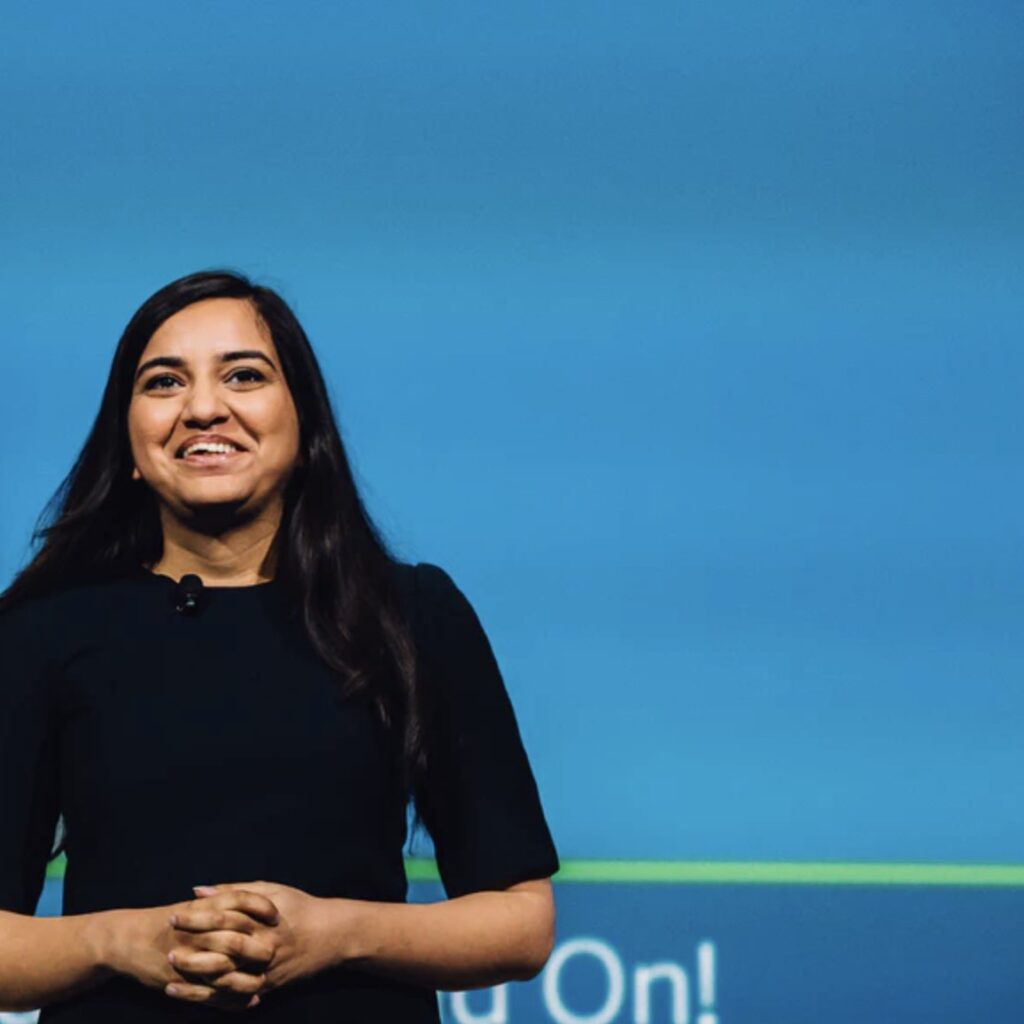
A Leading Voice on Responsible AI
Sharma has become one of the most respected advocates for ethical AI. She has advised governments, the United Nations, and international organizations on how AI should be deployed:
- Safely
- Transparently
- Without bias
- And with real accountability
Unlike many technologists, her approach isn’t about slowing AI down — it’s about building systems that are aligned with human values from the ground up.
She describes it not as “responsible regulation” but as responsible imagination — designing AI that helps the world without replicating its inequalities.
Why She Matters
Kriti Sharma stands out because she works at a powerful intersection:
research, product, ethics, and impact.
She’s built enterprise AI tools.
She’s designed social-good systems used in crisis response.
She’s shaped government policy.
And she’s made ethical AI accessible to ordinary people — not just researchers.
Just as Mira Murati is shifting the balance of power in enterprise AI, and Fei-Fei Li is shaping how machines see the world, Kriti Sharma is redefining why AI should be built in the first place.
Her leadership reminds the industry that innovation isn’t innovation if it leaves people behind.

What’s Next
AI for Good continues to expand globally, launching tools for mental health support, youth counseling, and vulnerable communities. Sharma is also working with international institutions to create frameworks for inclusive, rights-focused AI development.
If the next era of AI is about human alignment, Kriti Sharma is one of the clearest, strongest voices leading that shift.
Takeaway: Kriti Sharma is not just building AI systems — she’s building a blueprint for how technology should serve people. Her work bridges ethics and engineering, proving that the most advanced AI can also be the most humane.