

When the conversation around artificial intelligence focuses on speed and capability, one critical piece is often overlooked: human context. AI agents can process vast amounts of information, yet they frequently struggle to interpret tone, emotion, or the subtle cues that shape real human communication. That gap is exactly what emerging startup Nyne is working to solve.
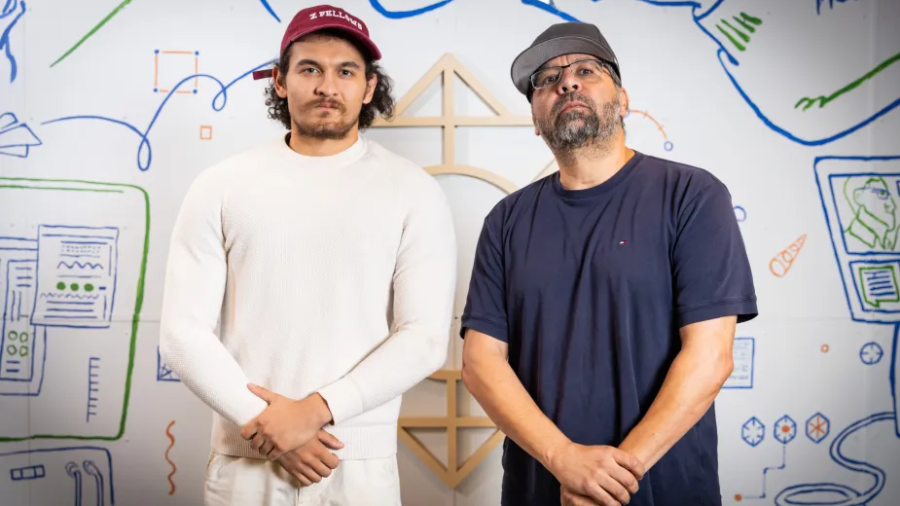
Founded by father-and-son team Tal Barmeir and Nadav Barmeir, the company is building technology designed to give AI systems a deeper understanding of human interactions. By embedding contextual intelligence into AI agents, Nyne aims to make conversations between humans and machines feel far more natural and meaningful.
Why Human Context Remains a Challenge for AI
Despite major breakthroughs in machine learning and generative AI, many AI agents still operate primarily on pattern recognition and statistical prediction. While these systems can produce impressive responses, they often struggle when communication becomes nuanced.
Human conversations are rarely straightforward. They involve sarcasm, emotional signals, cultural references, and situational awareness — elements that traditional AI systems often miss.
For enterprises deploying AI in areas like customer support, healthcare, and digital assistants, this lack of contextual understanding can create friction. An AI might technically answer a question but still fail to respond in a way that feels appropriate to the situation.
Nyne’s founders believe this gap represents one of the biggest barriers to AI becoming truly useful in everyday interactions.
Building AI That Understands More Than Words
Nyne’s platform focuses on enabling AI agents to understand intent, emotion, and situational context, not just the text or voice input they receive.
Instead of relying solely on traditional language processing models, the company combines multiple layers of analysis to interpret interactions more accurately. These include sentiment detection, behavioral signals, and contextual awareness frameworks.
The result is an AI system capable of responding not only with correct information but also with appropriate tone and understanding.
Among the capabilities Nyne is developing are:
- Emotion recognition to identify the emotional state behind a message
- Cultural and contextual awareness to adapt responses across different environments
- Situational interpretation to understand the broader context of a conversation
- Continuous learning systems that improve responses based on real interactions
This approach aims to transform AI agents from purely transactional tools into systems that feel more empathetic and responsive.
A Founder Story Rooted in Two Perspectives
The idea behind Nyne emerged from the complementary expertise of its founders.
Tal Barmeir brings extensive experience in artificial intelligence and machine learning research, having spent years studying how machines process language and data.
His son, Nadav Barmeir, contributes a different perspective focused on human behavior and psychology — an understanding of how people communicate, interpret tone, and react emotionally during interactions.
Together, the pair recognized that AI development had largely focused on technical capability, while the human dimension of communication remained underdeveloped.
Their goal became clear: create AI agents that understand people the way people understand each other.
Potential Applications Across Industries
As enterprises adopt AI agents across more workflows, contextual intelligence could become a defining capability.
Nyne’s technology has potential applications across several sectors:
Customer Experience
AI-powered support systems could better interpret frustrated customers and adjust responses accordingly, preventing escalation and improving satisfaction.
Healthcare
In clinical environments, contextual AI could help interpret patient conversations, assisting medical professionals by identifying emotional or situational signals during interactions.
Education
AI tutoring systems could adapt responses depending on whether a student appears confused, frustrated, or confident.
Enterprise Collaboration
Workplace AI assistants could interpret intent more accurately, improving productivity tools and internal communication systems.
How Nyne’s Technology Works
While the company has not publicly disclosed all technical details of its architecture, Nyne’s system is built around a multi-layer AI framework.
At a high level, the platform works through several stages:
- Input analysis – processing text, speech, or behavioral signals
- Context detection – identifying emotional tone and situational cues
- Intent modeling – interpreting what the user actually means
- Response generation – delivering a response aligned with both content and emotional context
- Feedback learning – improving responses through ongoing interactions
This layered approach allows the system to generate responses that are not only accurate but situationally appropriate.
Challenges Ahead for Contextual AI
While the concept of contextual AI is gaining traction, building systems that truly understand human nuance remains difficult.
AI models must balance several complex issues, including:
- avoiding cultural bias
- ensuring ethical use of emotional analysis
- maintaining privacy when analyzing behavioral signals
- delivering consistent performance across languages and cultures
Nyne’s founders acknowledge that solving these challenges will require ongoing research, transparency, and careful system design.
The Bigger Picture: The Next Evolution of AI Agents
The rise of AI agents is one of the most significant trends in enterprise technology today. However, the next phase of AI development may depend less on raw intelligence and more on how well machines understand human context.
By focusing on contextual awareness, Nyne is positioning itself within a growing movement to make AI systems more intuitive, empathetic, and practical in real-world interactions.
If successful, technologies like Nyne’s could reshape how AI assistants, enterprise automation tools, and digital platforms interact with people — bringing machines one step closer to understanding the complexities of human communication.